
Personal Loan Settlement in India:
Reduce Your Burden of Loan Legally

People find personal loans easy to obtain but they become hard to handle when their income starts to fluctuate.
People find it easy to manage their EMI payments from the time of loan approval until unexpected life events occur which include job loss and business slowdown and salary cut and medical emergency and unexpected expenses.
The moment that people stop making their EMIs payments, pressure begins to build up.
Why Personal Loan Debt Becomes Stressful
Personal loans usually come with:
- 12%–24% interest (sometimes higher in NBFC loans)
- Late EMI penalties
- Bounce charges
- Overdue interest added every month
When 2–3 EMIs are missed:
- Penalty starts adding
- Interest keeps increasing
- Outstanding amount grows
- Recovery department begins calling
After 90 days of non-payment, the account may be marked overdue seriously. At this stage:
- Recovery calls increase
- Legal notices may be issued
- Arbitration notice can be sent
Mental stress increases because the outstanding keeps growing even when no payment is being made. In such situations, exploring Personal Loan Settlement becomes a practical financial option.
What is Personal Loan Settlement?
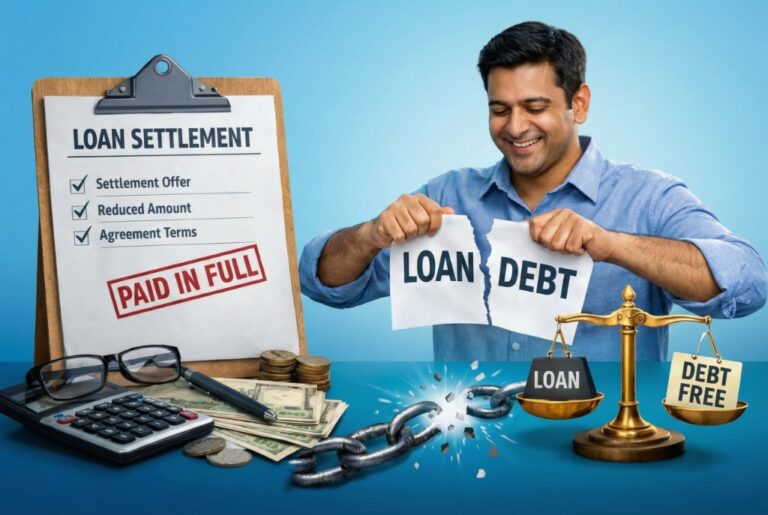
Personal loan settlement means that a borrower negotiates with their bank or NBFC to pay back their loan debt through a smaller payment which cancels their existing loan obligation.
In simple words, when you are genuinely unable to continue paying EMIs, the lender may agree to accept a lower one-time amount to close the loan account permanently. This process occurs after a borrower fails to make payments and the account becomes past due.
Example:
If total outstanding is ₹6 lakh, the lender may agree to close it at a lower lump-sum amount based on financial hardship (case-based).
The reduced amount depends on how long the loan is overdue and how strong your financial hardship proof is. Sometimes penalty and future interest are reduced first, and then the final payable amount is negotiated.
Every case works differently, so figures can vary.
Settlement Depends On:
The outcome of Personal Loan Settlement depends on several factors:
1. Current Financial Condition
If income has reduced due to job loss, business slowdown, or medical emergency, lenders may consider settlement more seriously. Proper explanation of your current income and expenses plays an important role. Without genuine hardship, lenders may insist on full payment.
2. EMI Default Period
How long the EMI has been unpaid matters a lot. If the loan is overdue for several months, the lender may be more open to negotiation. Early-stage defaults may not get immediate settlement offers.
3. Repayment History
If you had a good payment record earlier and default happened due to sudden financial problems, it strengthens your case. A borrower who paid regularly in the past is viewed differently from someone who never paid properly.
4. Lender Policy
Every bank and NBFC has its own internal settlement guidelines. Some lenders are more flexible, while others are strict. The negotiation approach depends on the specific lender and their recovery stage.
There is no fixed percentage for everyone.
Settlement is not “50% for all” or “70% for all.” The final amount depends on multiple factors and case handling.
Each case is handled differently, and proper strategy makes a big difference in the final outcome.
How Personal Loan Settlement Works
The Personal Loan Settlement process generally includes the following stages:
1. Proper Case Review
The first step is understanding the exact loan position:
- Total outstanding
- EMI missed
- Penalty and overdue charges
- Current income situation
Many borrowers don’t know how much of their outstanding is actual principal and how much is penalty and interest.
A clear review avoids confusion.
2. Communicating Financial Hardship
Lenders consider settlement when genuine financial difficulty is explained.
This may include:
- Job termination
- Business losses
- Medical expenses
- Family emergency
Proper communication creates scope for negotiation.
Without explanation, lenders may continue the regular recovery process.
3. Getting Time to Arrange Settlement Amount
One important part of structured handling is creating time.
Instead of sudden pressure and daily panic, proper representation helps:
- Slow down aggressive follow-ups
- Reduce extreme recovery pressure
- Allow time to arrange funds
- Plan lump-sum payment calmly
Time management makes a big difference in settlement cases.
4. Handling Recovery Calls and Visits
Recovery pressure can include:
- Continuous calls
- Messages from different numbers
- Home visit warnings
- Legal notice reminders
Under stress, borrowers sometimes agree to unrealistic payment promises.
The guidance provided at this stage enables people to
- Responding correctly
- Avoiding emotional decisions
- Understanding legal position
- Taking action if harassment crosses limits
People who maintain their composure under pressure will not make errors.
5. Negotiating Realistic Settlement
The goal of negotiation is to:
- Reduce total payable amount (case-based)
- Remove or reduce penalty charges
- Close the loan in a structured manner
- Secure written settlement confirmation
In some cases, short settlement installments may also be discussed depending on lender policy.
The entire situation relies on the evidence of borrowing history and financial difficulties.
Credit Card Settlement vs Personal Loan Settlement
While both options involve negotiation, Personal Loan Settlement typically follows a different repayment structure compared to credit card settlement.
Credit Card Settlement
- Very high interest (30%–36%)
- Minimum due trap
- Outstanding grows very fast
- Multiple small payments
- Heavy penalties and GST
Credit card debt increases rapidly because interest is compounding monthly.
Personal Loan Settlement
- Fixed EMI structure
- Pre-decided loan tenure
- Lower interest compared to credit cards
- Clear principal and interest structure
In personal loans, negotiation mainly depends on how long EMIs are overdue and financial hardship situation.
Strategy for handling both is different.
Real Case Study – Shankar from Hyderabad
Shankar from Hyderabad had taken three personal loans:
- One from KreditBee
- One from Cholamandalam
- One from Yes Bank
Initially, he was managing all EMIs properly.
After losing his job, repayment became difficult.
Within a few months:
- All three loans became overdue
- Recovery calls started daily
- Different lenders were calling repeatedly
- Legal warning messages had started
Total outstanding became impossible to manage together.
The pressure from three different lenders created serious stress.
Personal Loan Settlement
First, all three loan statements were reviewed.
Then:
- Overdue charges were analysed
- Financial hardship was communicated
- Time was requested for structured settlement
- Negotiation was done one lender at a time
Instead of reacting emotionally, the case was handled in phases.
Over time:
- Penalty charges were reduced
- Settlement figures were negotiated
- Lump-sum closure was arranged in a structured way
All three loans were closed (case-based outcome).
Recovery pressure reduced and financial stability slowly returned.
This case shows how Personal Loan Settlement can provide structured relief when handled professionally.
Important Things to Know Before Settlement
Before going for personal loan settlement:
- CIBIL report will reflect “Settled”
- Credit score may drop temporarily
- Written settlement confirmation is mandatory
- Payment must be made only through official bank channel
Proper documentation protects from future disputes.
Why Structured Negotiation Makes a Difference
Handling settlement without clarity can lead to:
- Overpayment
- Wrong promises
- Fear of legal language
- Panic decisions
A structured approach:
- Brings clarity
- Reduces stress
- Saves time
- Protects legally
Personal loan problems feel heavy, but with the right handling, the situation can be controlled.
Final Thoughts
Personal loan default does not mean the situation is over.
It means action is required at the right time.
The total amount of interest and penalties keeps increasing every month. The process of early structured negotiation enables better results through planned account closure which decreases debt obligations.
People can achieve financial recovery through their ability to manage stressful situations.
India’s trusted loan settlement service. We help families break free from debt stress through legal and ethical means.
Contact Us
- +91 75250 96501
- ask@settleloanlegally.com
- Mon - Sat 10AM - 6PM
© 2026 Settle Loan Legally | All rights reserved