
Vehicle Loan Settlement in India:
How to Settle Your Car or Bike Loan and Prevent Repossession
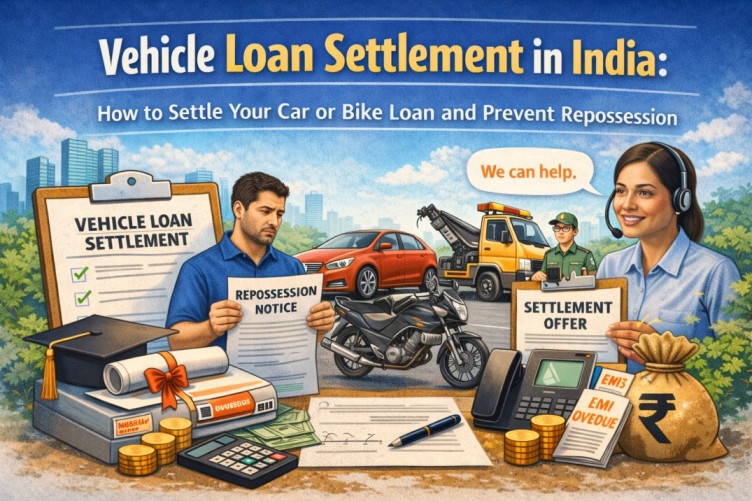
Many people purchase cars or bikes through vehicle loans because it allows them to own a vehicle without paying the full amount upfront. However, unexpected financial challenges such as job loss, business losses, medical emergencies, or family responsibilities can make it difficult to continue paying EMIs on time. When loan payments are missed for several months, banks or financial institutions may initiate recovery actions, including repossession of the vehicle.
In such situations, vehicle loan settlement can become an option for borrowers who are unable to repay the full outstanding amount. This guide explains how car loan settlement and bike loan settlement in India works, how borrowers can prevent repossession, and what legal rights they have.
What Is Vehicle Loan Settlement?
Vehicle loan settlement is a negotiated agreement between the borrower and the lender in which the borrower pays a reduced lump-sum amount to close the loan account instead of paying the full outstanding loan balance.
This process is usually considered when:
- The borrower is unable to continue EMI payments
- The loan account has become overdue for several months
- The borrower is facing serious financial hardship
- The lender prefers partial recovery rather than prolonged legal proceedings
Through negotiation, the lender may accept a one-time settlement amount to close the loan account.
Why Vehicle Loan Defaults Happen?
Vehicle loan defaults are more common than people think. Borrowers may face repayment difficulties due to several reasons:
- Job loss or salary reduction
- Business losses or financial instability
- Medical emergencies in the family
- Rising living expenses
- Unexpected financial obligations
When EMIs are missed for consecutive months, the loan account may become overdue and lenders may start recovery procedures.
Can Banks Repossess Your Vehicle?
Yes. If a borrower continuously defaults on EMIs, the lender may initiate repossession of the vehicle. However, repossession must follow fair practices and regulatory guidelines issued by the Reserve Bank of India.
Banks and NBFCs are required to follow certain procedures, including:
- Sending loan default notices to the borrower
- Providing opportunities to clear overdue payments
- Following ethical recovery practices
- Avoiding harassment or intimidation during recovery
Borrowers have the right to communicate with lenders and explore settlement options before repossession takes place.
How Vehicle Loan Settlement Works?
Vehicle loan settlement generally involves several steps:
1. Reviewing the Loan Account
The borrower first reviews the loan account to understand:
- Total outstanding loan amount
- Pending EMIs and penalties
- Current loan status
This information helps determine whether settlement is a suitable option.
2. Negotiating with the Bank
Once the borrower explains their financial hardship, negotiations may begin with the lender.
The settlement amount depends on several factors:
- Outstanding loan balance
- Loan default duration
- Borrower’s financial condition
- Value of the vehicle
- Lender policies
In many cases, lenders prefer recovering part of the loan through settlement instead of repossessing and auctioning the vehicle.
3. Agreement on One-Time Settlement
If the lender agrees, they will issue a one-time settlement offer mentioning:
- Settlement amount
- Payment deadline
- Conditions for closing the loan account
The borrower must ensure that the agreement is documented properly.
4. Payment and Loan Closure
After the settlement amount is paid, the lender may provide:
- Loan settlement letter
- No dues certificate
- Loan closure confirmation
These documents are important for future reference.
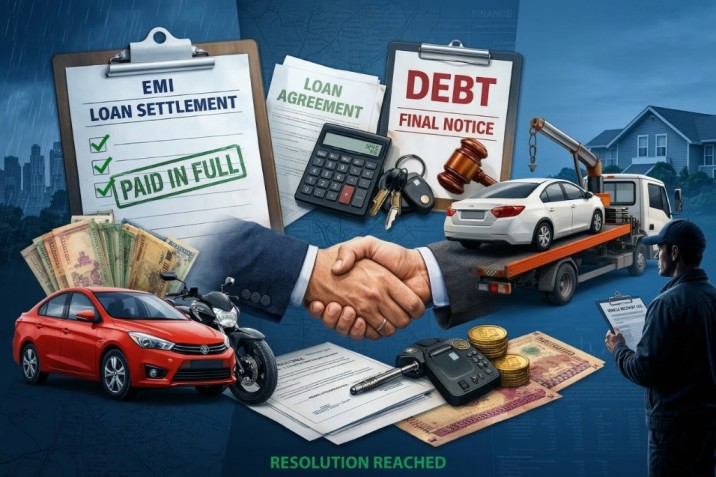
How to Prevent Vehicle Repossession?
Borrowers facing EMI defaults often worry about losing their vehicle. However, repossession is not always immediate, and borrowers may still have options to resolve the issue.
Here are some steps that can help prevent repossession:
Communicate with the Lender Early
Ignoring calls or notices from the bank can make the situation worse. Instead, borrowers should communicate with the lender and explain their financial situation.
Request Restructuring or Temporary Relief
Banks may sometimes offer:
- Temporary EMI relief
- Loan restructuring
- Extended loan tenure
These options may help borrowers regain financial stability.
Explore Vehicle Loan Settlement
If repayment is no longer possible, negotiating a one-time settlement may help resolve the debt and prevent prolonged recovery actions.
Impact of Vehicle Loan Settlement on Credit Score
Borrowers should understand that loan settlement may affect their credit report.
When a loan is settled rather than fully repaid, the account may be reported to credit bureaus as “settled” instead of “closed.”
This can temporarily affect the borrower’s credit score and future loan eligibility.
However, many borrowers still choose settlement because it helps them:
- Resolve pending debt
- Avoid long-term recovery pressure
- Achieve financial closure
Over time, maintaining responsible financial habits can help rebuild credit history.
What Happens After Loan Settlement?
Once the settlement amount is paid and the account is closed, borrowers should ensure they receive the necessary documents.
Important documents may include:
- Settlement confirmation letter
- Loan closure certificate
- No dues certificate
For vehicle loans, additional steps may also be required to clear the lender’s hypothecation from the vehicle registration certificate, allowing proper ownership transfer.
Ownership Transfer After Settlement
If a borrower wishes to sell the vehicle after settlement, the lender’s name must be removed from the vehicle registration records.
This process usually involves updating the records with the relevant transport authority in India.
Proper documentation ensures smooth ownership transfer and prevents future legal complications.
Borrower Rights During Loan Recovery
Borrowers often feel intimidated when recovery agents contact them. However, borrowers have rights under banking regulations.
Guidelines issued by the Reserve Bank of India emphasize that recovery agents must:
- Treat borrowers with respect
- Avoid threats or abusive language
- Follow proper communication protocols
- Respect borrower privacy
If recovery practices become unfair or abusive, borrowers can raise complaints with the bank’s grievance redressal system.
When Should You Consider Vehicle Loan Settlement?
Vehicle loan settlement may be considered when:
- The borrower is unable to pay EMIs for a long period
- Financial hardship makes repayment impossible
- The loan account has become severely overdue
- The borrower wants to resolve the debt and avoid further financial stress
Every financial situation is different, so borrowers should carefully evaluate their options.
Getting Professional Assistance
Negotiating loan settlement with banks can sometimes be challenging. Understanding lender policies, legal guidelines, and documentation requirements may require professional assistance.
Platforms like Settle Loan Legally help borrowers understand their options related to:
- Vehicle loan settlement
- Preventing repossession
- One-time settlement negotiations
- Resolving financial disputes with lenders
Seeking guidance can help borrowers make informed decisions and resolve loan issues more efficiently.
Final Thoughts
Vehicle loans make it easier to purchase cars and bikes, but financial hardships can sometimes make repayment difficult. When borrowers face prolonged EMI defaults, vehicle loan settlement can offer a practical way to resolve the situation.
By communicating with lenders, understanding settlement options, and ensuring proper documentation, borrowers can work toward resolving their loan obligations and regaining financial stability.
Taking timely action is important. The sooner borrowers address repayment challenges, the more options they may have to protect their financial future.
India’s trusted loan settlement service. We help families break free from debt stress through legal and ethical means.
Contact Us
- +91 75250 96501
- ask@settleloanlegally.com
- Mon - Sat 10AM - 6PM
© 2026 Settle Loan Legally | All rights reserved